
Private Number Plates and DVLA Personalised Registrations
Enjoy Fast Track Transfers, Full After-Sales Support & Swift Delivery!
Enter Your Initials, Name, Car or Anything Else...
Current Style Number Plates
Since September 2001, current style registration plates have been the standard format in the UK.
These number plates feature clear vehicle age identifiers while also offering plenty of opportunities for personalisation.
Learn more about the current number plate system below or browse available options today.
Current Number Plates for Sale
What is the Current Number Plate Style?
The DVLA needed to design a system that would allow for a vast range of combinations, and that’s exactly what the new style number plate system does.
There are over 12 million combinations per six months. The current number plate structure has seven characters:
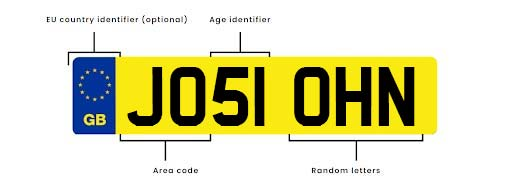
Two Letters
The first two letters of the UK number plate area codes detail where the car was registered. Each region in the UK has a different identifier.
For example, vehicles registered in Manchester and Merseyside start with an M, with the second letter indicating the area (MA, MB, MC, etc.).
Age Identifiers
The two numbers after the first letters are the age identifiers and are also where the six-monthly system applies.
For example, an 02 plate means it was registered between the 1st of March 2002 to the 31st of August 2002. Meanwhile, a 52 plate means it was registered between the 1st of September 2002 and the 28th of February 2003.
Random Letters
The final three letters are random combinations. Unlike older number plates, they also incorporate the letter Z. It’s these letters that make it easier for automated systems and law enforcement to identify registration details.
New Style Registration Year Identifiers
The age identifier system is where things can get complicated. Each combination details the year the car was registered and the six-month period during which it was registered (typically September to February and March to August).
When a car is registered from March to August, the age identifier is the specific year. For example, 25 is for 2025, but the DVLA adds 50 onto the initial year during the September to February period. So, 25 becomes 75.
This table breaks down age identifiers from 2001 onwards.
| Age Identifier | Registration Period |
|---|---|
| 51 | 1st of September 2001 to 28th/29th February 2002 |
| 02 | 1st of March 2002 to 31st of August 2002 |
| 52 | 1st of September 2002 to 28th/29th February 2003 |
| 03 | 1st of March 2003 to 31st of August 2003 |
| 53 | 1st of September 2003 to 28th/29th February 2004 |
| 04 | 1st of March 2004 to 31st of August 2004 |
| 54 | 1st of September 2004 to 28th/29th February 2005 |
| 05 | 1st of March 2005 to 31st of August 2005 |
| 55 | 1st of September 2005 to 28th/29th February 2006 |
| 06 | 1st of March 2006 to 31st of August 2006 |
| 56 | 1st of September 2006 to 28th/29th February 2007 |
| 07 | 1st of March 2007 to 31st of August 2007 |
| 57 | 1st of September 2007 to 28th/29th February 2008 |
| 08 | 1st of March 2008 to 31st of August 2008 |
| 58 | 1st of September 2008 to 28th/29th February 2009 |
| 09 | 1st of March 2009 to 31st of August 2009 |
| 59 | 1st of September 2009 to 28th/29th February 2010 |
| 10 | 1st of March 2010 to 31st of August 2010 |
| 60 | 1st of September 2010 to 28th/29th February 2011 |
| 11 | 1st of March 2011 to 31st of August 2011 |
| 61 | 1st of September 2011 to 28th/29th February 2012 |
| 12 | 1st of March 2012 to 31st of August 2012 |
| 62 | 1st of September 2012 to 28th/29th February 2013 |
| 13 | 1st of March 2013 to 31st of August 2013 |
| 63 | 1st of September 2013 to 28th/29th February 2014 |
| 14 | 1st of March 2014 to 31st of August 2014 |
| 64 | 1st of September 2014 to 28th/29th February 2015 |
| 15 | 1st of March 2015 to 31st of August 2015 |
| 65 | 1st of September 2015 to 28th/29th February 2016 |
| 16 | 1st of March 2016 to 31st of August 2016 |
| 66 | 1st of September 2016 to 28th/29th February 2017 |
| 17 | 1st of March 2017 to 31st of August 2017 |
| 67 | 1st of September 2017 to 28th/29th February 2018 |
| 18 | 1st of March 2018 to 31st of August 2018 |
| 68 | 1st of September 2018 to 28th/29th February 2019 |
| 19 | 1st of March 2019 to 31st of August 2019 |
| 69 | 1st of September 2019 to 28th/29th February 2020 |
| 20 | 1st of March 2020 to 31st of August 2020 |
| 70 | 1st of September 2020 to 28th/29th February 2021 |
| 21 | 1st of March 2021 to 31st of August 2021 |
| 71 | 1st of September 2021 to 28th/29th February 2022 |
| 22 | 1st of March 2022 to 31st of August 2022 |
| 72 | 1st of September 2022 to 28th/29th February 2023 |
| 23 | 1st of March 2023 to 31st of August 2023 |
| 73 | 1st of September 2023 to 28th/29th February 2024 |
Can You Use the Current Reg Plate Style On Any Car?
No, the DVLA registration website clearly states that you can’t put a current number plate on any car. This is because you can’t make your vehicle appear newer than it actually is.
For example, if your car was registered in 2013, you can’t use a 2014-2026 number plate.
This also applies to the six months. 25 plates can only be assigned to cars registered on or after the 1st of March 2025.
However, there is some flexibility with legacy number plates. If you choose an older number plate, you can use it as long as your car was registered within or after that time.
So, a car registered in 2024 could use a 2013 plate. This gives you more opportunities to find private number plates that match your initials or a phrase you want to incorporate.
Regional Considerations
The first two letters of DVLA number plates indicate where the car was registered, but they’re transferable to any location. If you purchase a car with a Scottish number plate, you can use it anywhere in the UK.
Vehicle Type Compatibility
New style UK number plates are compatible with a range of vehicles, including:
- Cars and light commercial vehicles
- Motorcycles (with spacing modifications)
- Heavy goods vehicles
- Agricultural vehicles (there are some restrictions here)
Are Current Style Private Number Plates A Good Investment?
Absolutely! Current reg plates can offer excellent value for money and often appreciate over time, especially when the letter combination is desirable.
Once licence plates begin to age and combinations become less available, you can benefit from increased value.
The most popular style combinations include initials, words with letter-number substitutions, nicknames, and trade references.
Use Our Database to Find Your New Number Plate
SwiftReg has an extensive database of over 60 million private and DVLA number plates. You can use our personalised number plate check to find the perfect combination for your needs.
Thinking of selling your number plate? Our sales tool lets you set your own price and pay no fees. Instead of you paying commission, we add it to the purchase price.